
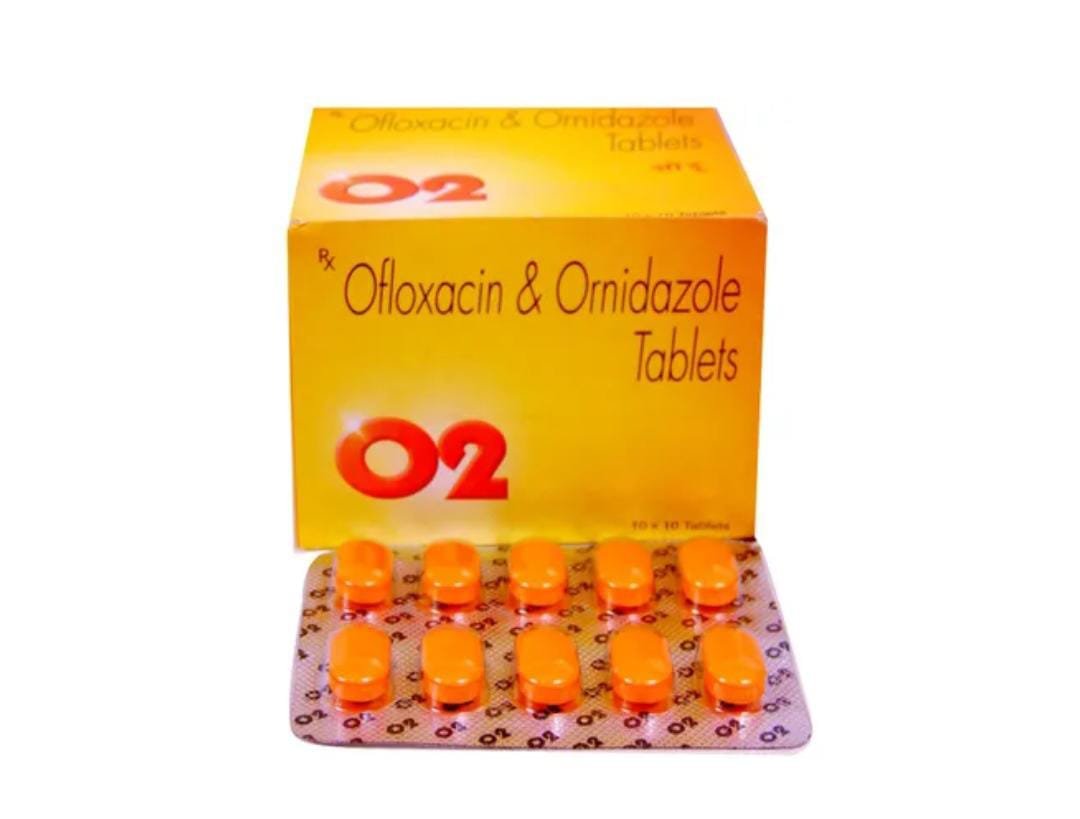
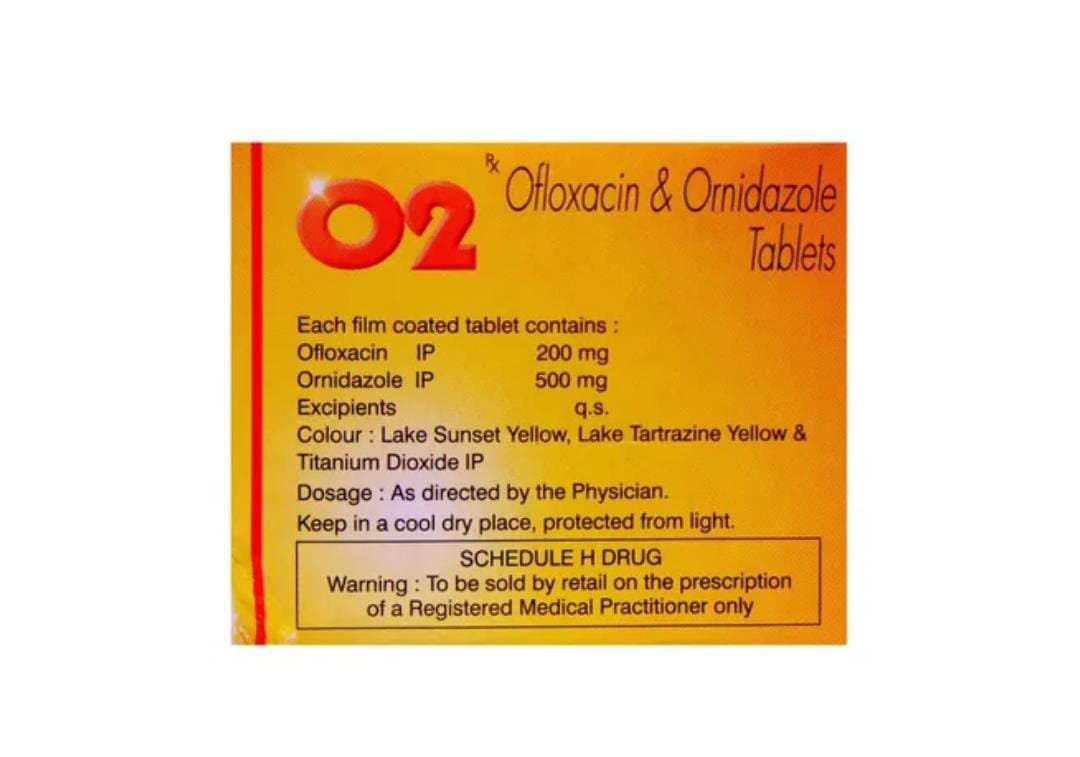
About O2 Tablet
O2 Tablet is used to treat bacterial infections of the urinary tract, bacterial infections due to inflammation of the peritoneum, eye and ear infections, skin and soft tissue infections, sexually transmitted infections, respiratory infections, vaginal infections, protozoan infections, intra-abdominal infections, and infections during surgical procedures. It is also indicated in the treatment of diarrhoea of mixed infections in adults.
O2 Tablet is a combination of Ofloxacin and Ornidazole. Ofloxacin inhibits the DNA gyrase enzyme. Ornidazole inhibits protein synthesis and leads to cell death, thereby killing the bacteria.
In some cases, O2 Tablet may cause side effects such as nausea, vomiting, abdominal pain, headache, and dizziness. Most of these side effects do not require medical attention and will resolve gradually over time. However, you are advised to talk to your doctor if the side effects persist or worsen.
Take O2 Tablet as prescribed. It can be taken with or without food. Swallow the medicine as a whole with a glass of water. The dose and duration of medicine will be decided by the physician. Do not chew, break or crush the medicine.
Before taking O2 Tablet , inform your doctor if you are allergic to any of its ingredients. Talk to your doctor if you experience pain in tendons, swelling, and inflammation, as O2 Tablet is associated with an increased risk of tendon rupture and tendonitis. Consult your doctor before taking O2 Tablet if you are pregnant or breastfeeding.
Uses of O2 Tablet
O2 Tablet is used in the treatment of bacterial and parasitic infections. The detailed uses of O2 Tablet are as follows:
- Treatment of Diarrhoea and Dysentery: O2 Tablet is effective in treating gastrointestinal infections caused by bacteria and parasites, such as acute diarrhoea and dysentery.
- Urinary Tract Infections (UTIs): O2 Tablet can also be used to treat urinary tract infections caused by susceptible bacteria.
- Respiratory Tract Infections: O2 Tablet is helpful in lowering respiratory tract infections, including conditions like bronchitis and pneumonia.
- Skin and Soft Tissue Infections: O2 Tablet is also used to treat bacterial infections affecting the skin and soft tissues, ensuring effective relief.
Directions for Use
- O2 Tablet can be taken with or without food, preferably with food to reduce stomach discomfort.
- It is usually taken twice daily or as prescribed by your doctor.
- Swallow O2 Tablet as a whole with a glass of water.
- Do not crush, chew, or break it.
Key Benefits
- O2 Tablet belongs to the group of medicines called antibiotics used to treat various bacterial infections.
- It is also indicated in the treatment of diarrhoea of mixed infections in adults.
- Ofloxacin inhibits DNA gyrase, which is required for the replication, transcription, and repair of the DNA.
- Ornidazole inhibits protein synthesis and leads to cell death, thereby killing the bacteria.
- O2 Tablet is a broad-spectrum antibiotic effective against a wide range of gram-positive and gram-negative bacteria.
How O2 Tablet Works
Storage
What if I have taken an overdose of O2 Tablet
Drug Warnings
- Do not take O2 Tablet if you are allergic to any of its contents; if you had swelling or tearing of tendons while taking quinolone antibiotics; or if you have myasthenia gravis, as it may cause increased muscle weakness.
- Talk to your doctor before taking O2 Tablet if you have epilepsy, low levels of potassium, nervous or muscle problems, head injury or brain tumour, diabetes, rheumatoid arthritis, multiple sclerosis, heart, kidney or liver problems.
- Consult your doctor before taking O2 Tablet if you are pregnant or breastfeeding.
- O2 Tablet may cause dizziness and drowsiness, so drive only if you are alert.
- Avoid alcohol consumption while taking O2 Tablet as it may cause increased dizziness.
- O2 Tablet is not recommended for children under 16.
Diet & Lifestyle Advise
- Antibiotics can alter the useful bacteria in the stomach, which help in digestion. Therefore, you are advised to take foods rich in probiotics such as yogurt/curd, kefir, sauerkraut, tempeh, kimchi, miso, kombucha, buttermilk, natto and cheese.
- Eat fiber-rich food like whole grains, beans, lentils, berries, broccoli, peas and bananas.
- Avoid foods rich in calcium, grapefruit and grapefruit juice, as they might hinder the absorption of antibiotics.
- Avoid consumption of alcohol and usage of tobacco.





Reviews
There are no reviews yet.